
The technology worked.
The care teams didn't believe in it.
That was the real problem.
Role: Brand Storytelling Lead, Script & Narrative Architecture
Client: Leading Children's Hospital
Client under NDA. Visuals and touchpoints recreated to reflect the strategy, voice, and results I delivered.
Insight
A leading children's hospital needed to pitch a complex healthcare platform to leadership. App demos don't inspire. Technology can feel cold and transactional. Care shouldn't.
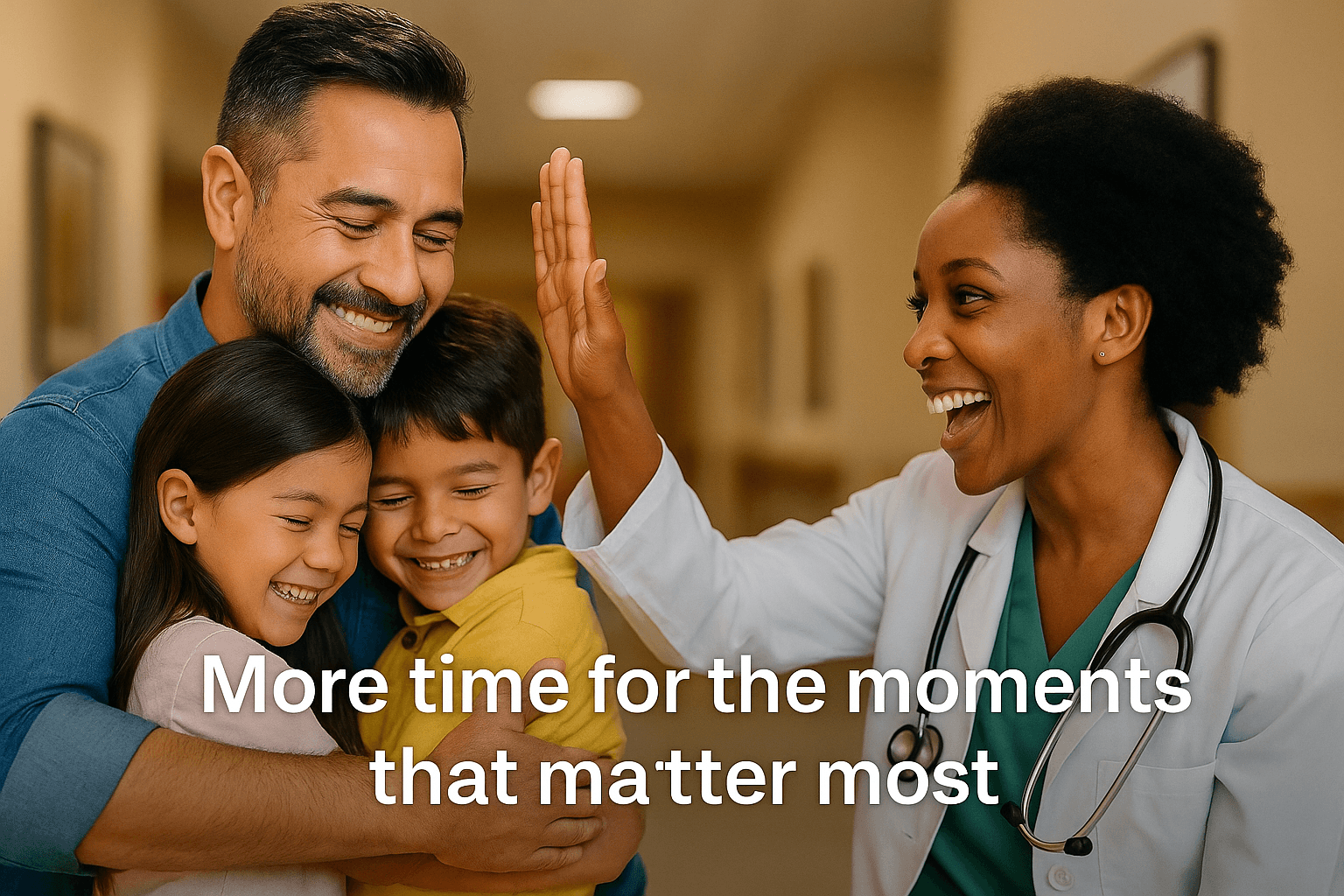
When care teams are buried in disconnected systems, they lose time with patients. The real value wasn't efficiency. It was creating space for the moments that matter.
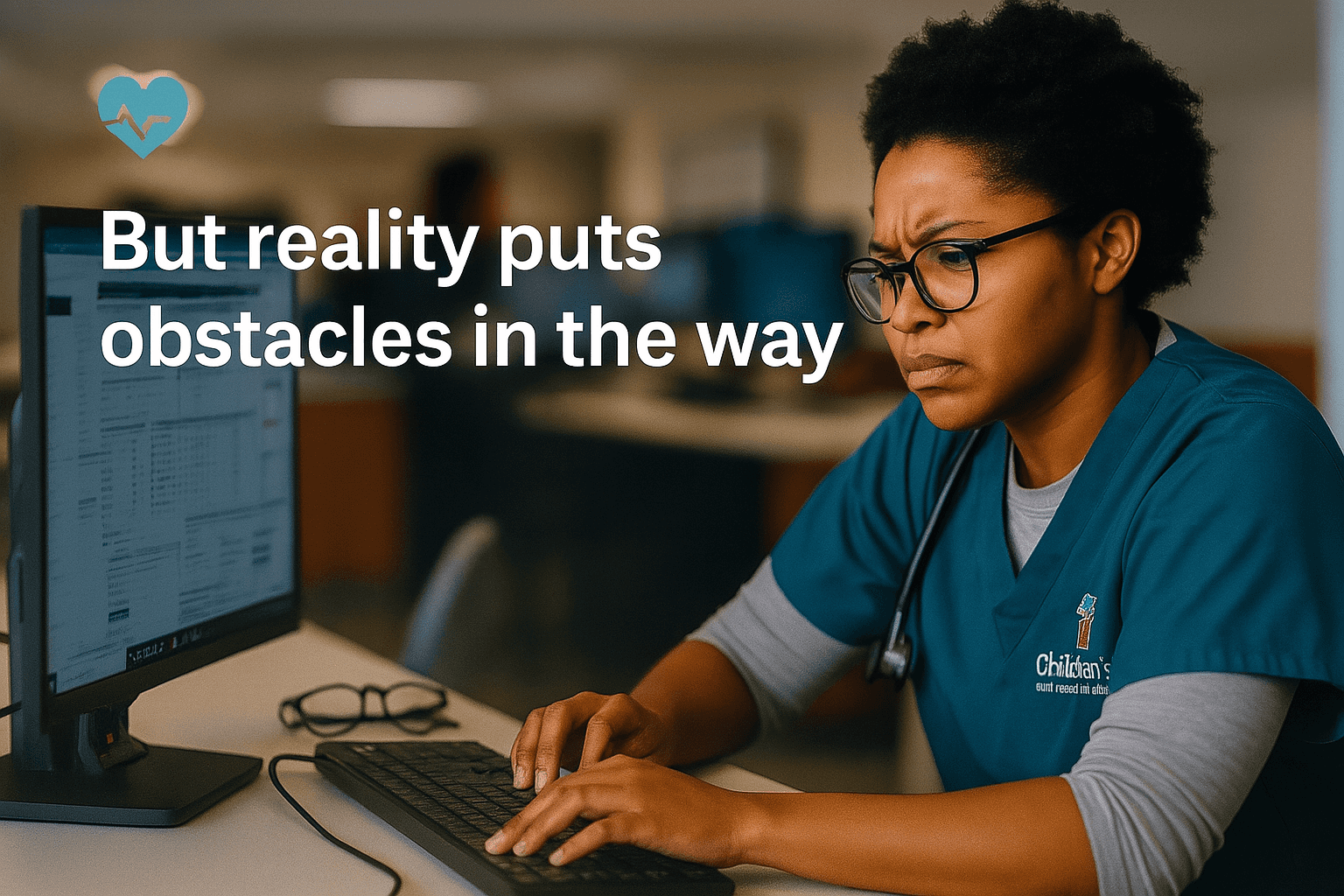
Hospital executives saw the platform as infrastructure. Care teams saw it as administrative burden. Neither saw it as something that could protect what drew them to healthcare in the first place.
Truth: Technology demos convince people of capabilities. Human stories convince them of value.
The Creative Platform
Stop Leading with Features. Start with Moments.
The breakthrough: Shift from product features to emotional return on investment. Instead of showing what the technology does, show what it makes possible.
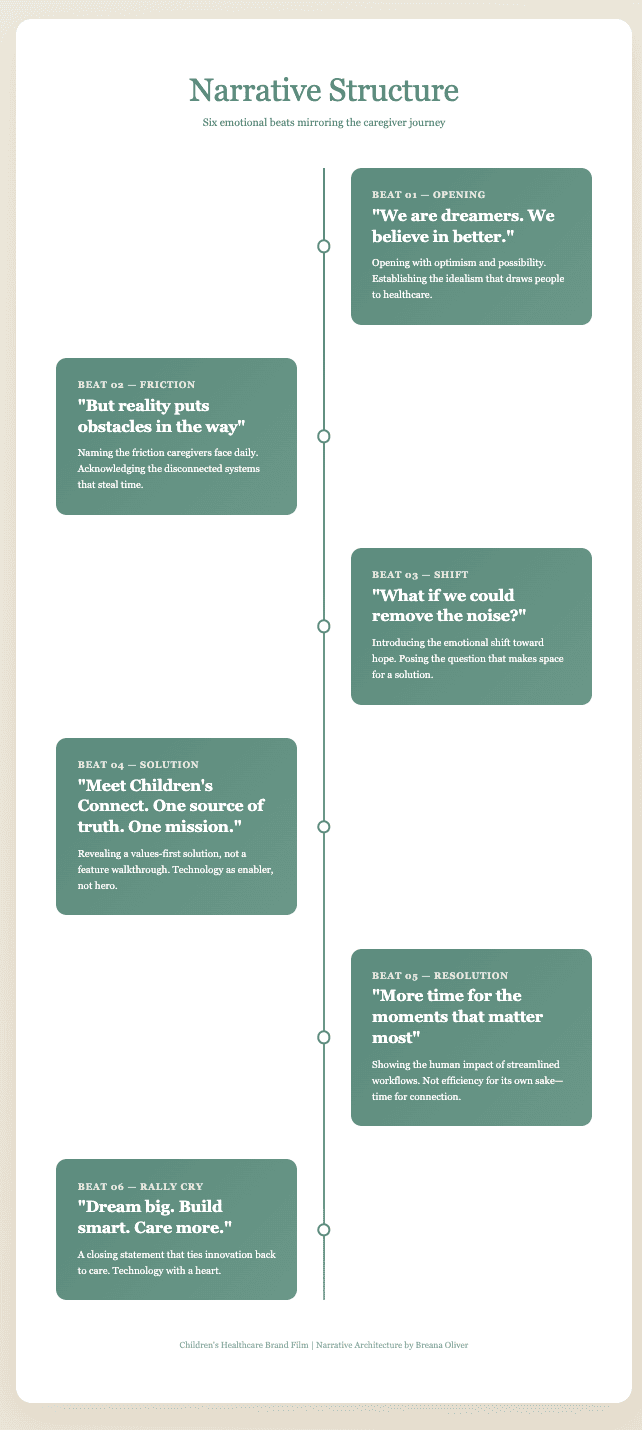
I led brand storytelling and script development, translating a complex healthcare platform into an emotional narrative hospital leadership could champion.
The challenge wasn't just writing a script. It was building a narrative framework that could shift how decision-makers saw the technology. Not as another system to implement, but as a tool that gives caregivers what they've always wanted: more time with the people who need them most.
Approach
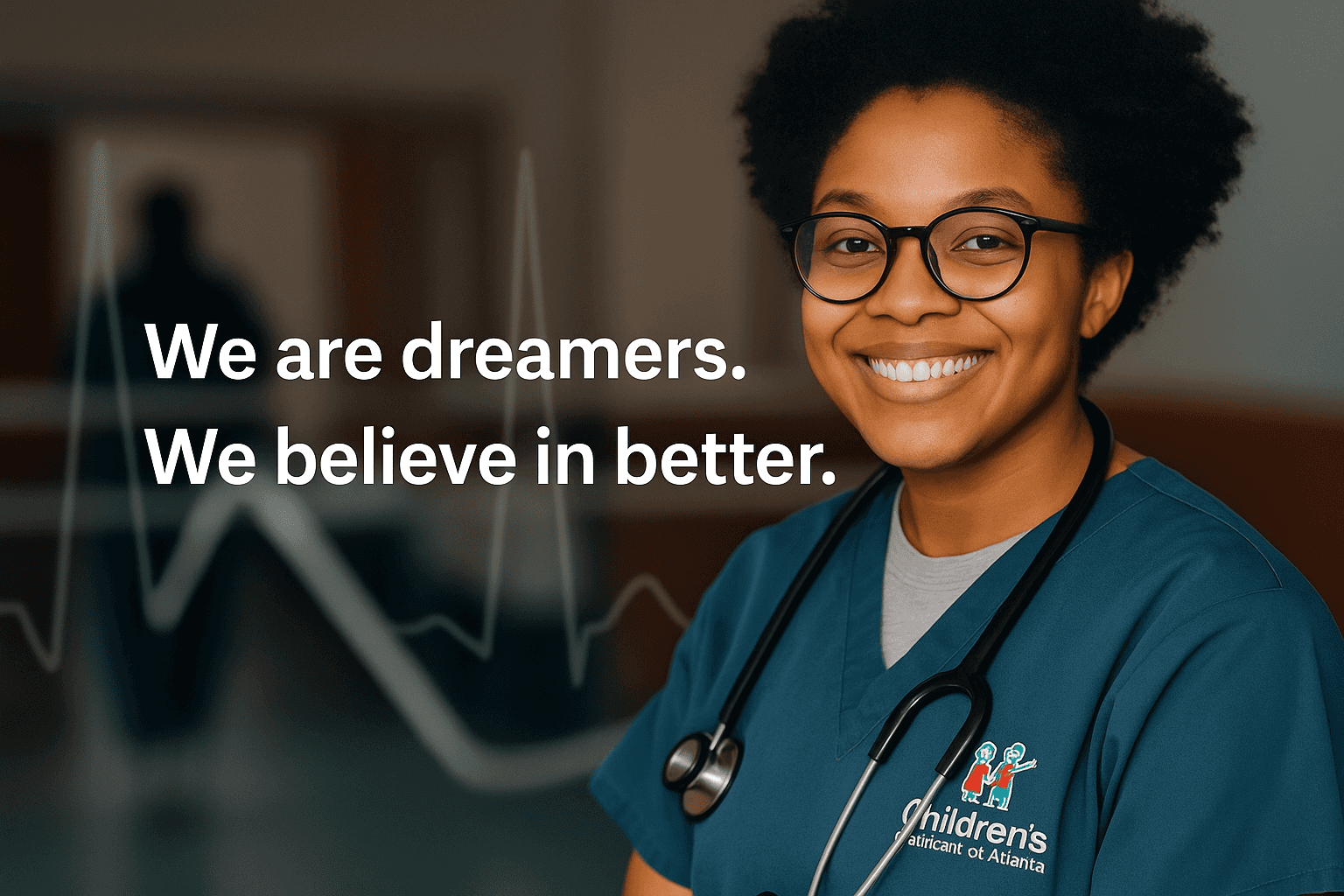
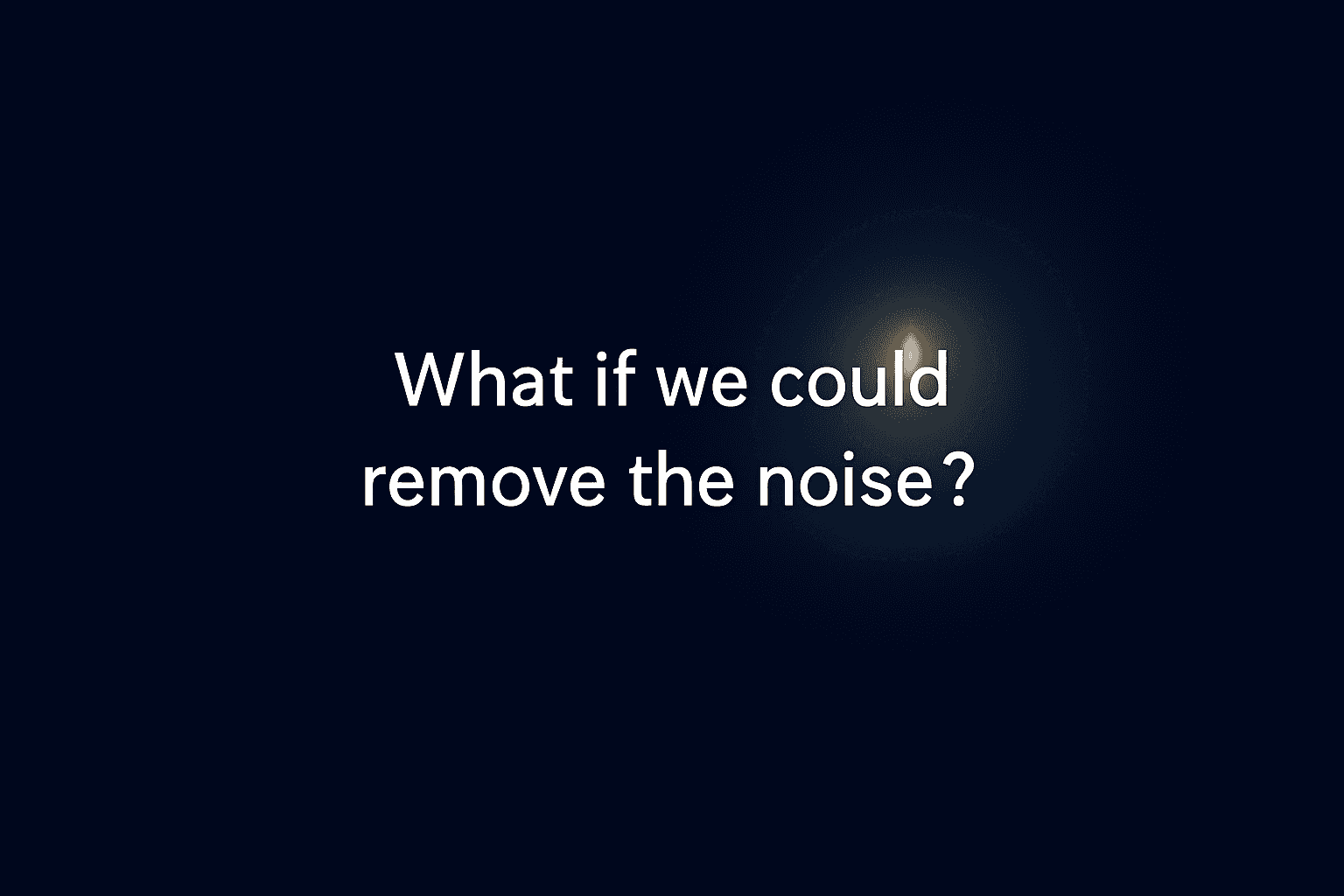
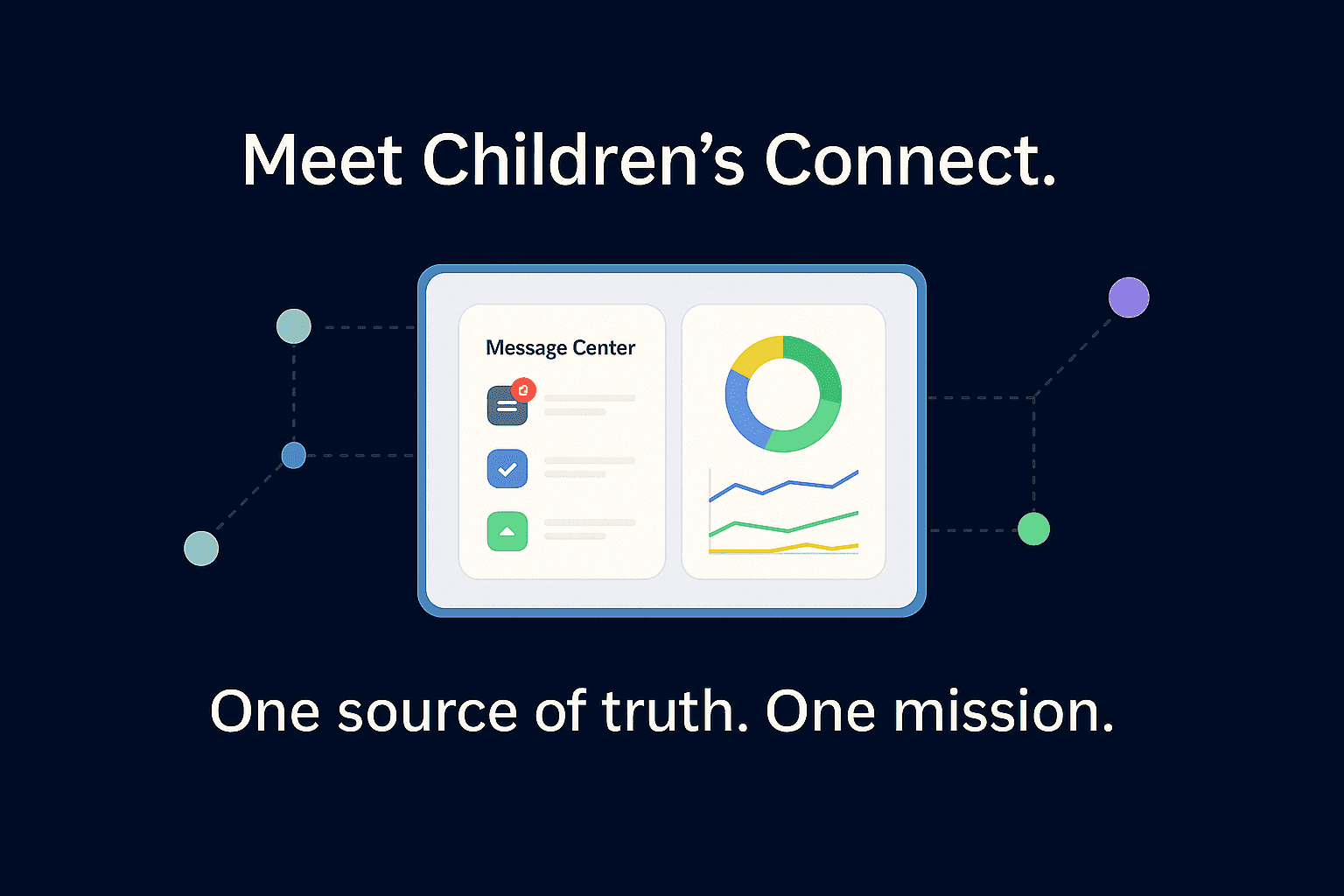
I wrote the script as a series of emotional beats, each scene mirroring the caregiver journey from idealism to friction to hope. Rather than leading with features, I built a narrative framework that shifted how decision-makers saw the technology. Not as another system to implement, but as a tool that gives caregivers what they have always wanted: more time with the people who need them most. The messaging became the template for all rollout communications across hospital systems.
Impact
Stakeholders stopped talking about workflows and features and started talking about making room for care.
What Changed:
Leadership presentations shifted to lead with why, not what
The film became the creative foundation for all rollout communications across hospital systems
The narrative framework became the template for how the brand talks about all technology solutions
The story didn't just launch a product. It changed how an organization talks about innovation.