FIFA said soccer was coming to America.
Black Seattle said: we never stopped playing.
Role: Campaign Concept & Strategy
Client: FIFA 2026 World Cup (Spec Work)
Insight
When people picture American soccer, they don't picture us. But the footwork? The creativity? The improvisation under pressure? That's been ours.
Soccer in America got coded as suburban. European. Something you sign your kids up for, not something you grew up doing.
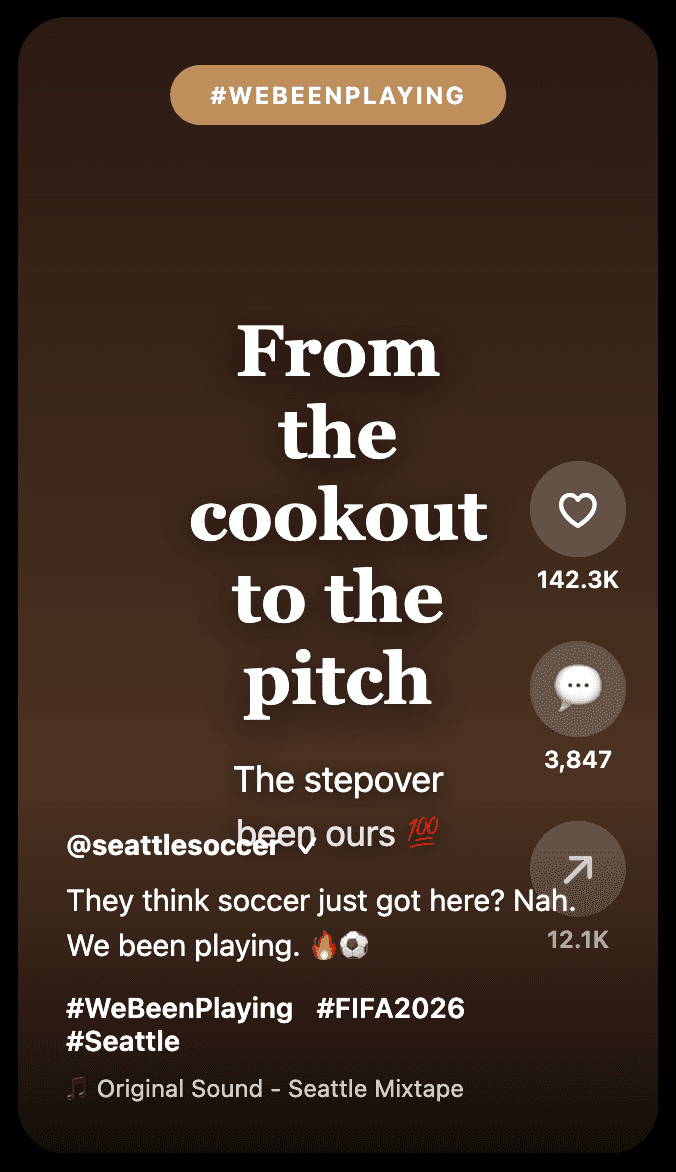
But the stepover? That's a hesitation move. The nutmeg? That's playground rules. The celebration? That's church and cookout and Saturday morning all in one.
Truth: The 2026 World Cup isn't bringing soccer to Black Seattle. It's just finally pointing a camera at what's already here.
The Creative Platform
The game isn't new to us. The invitation is.
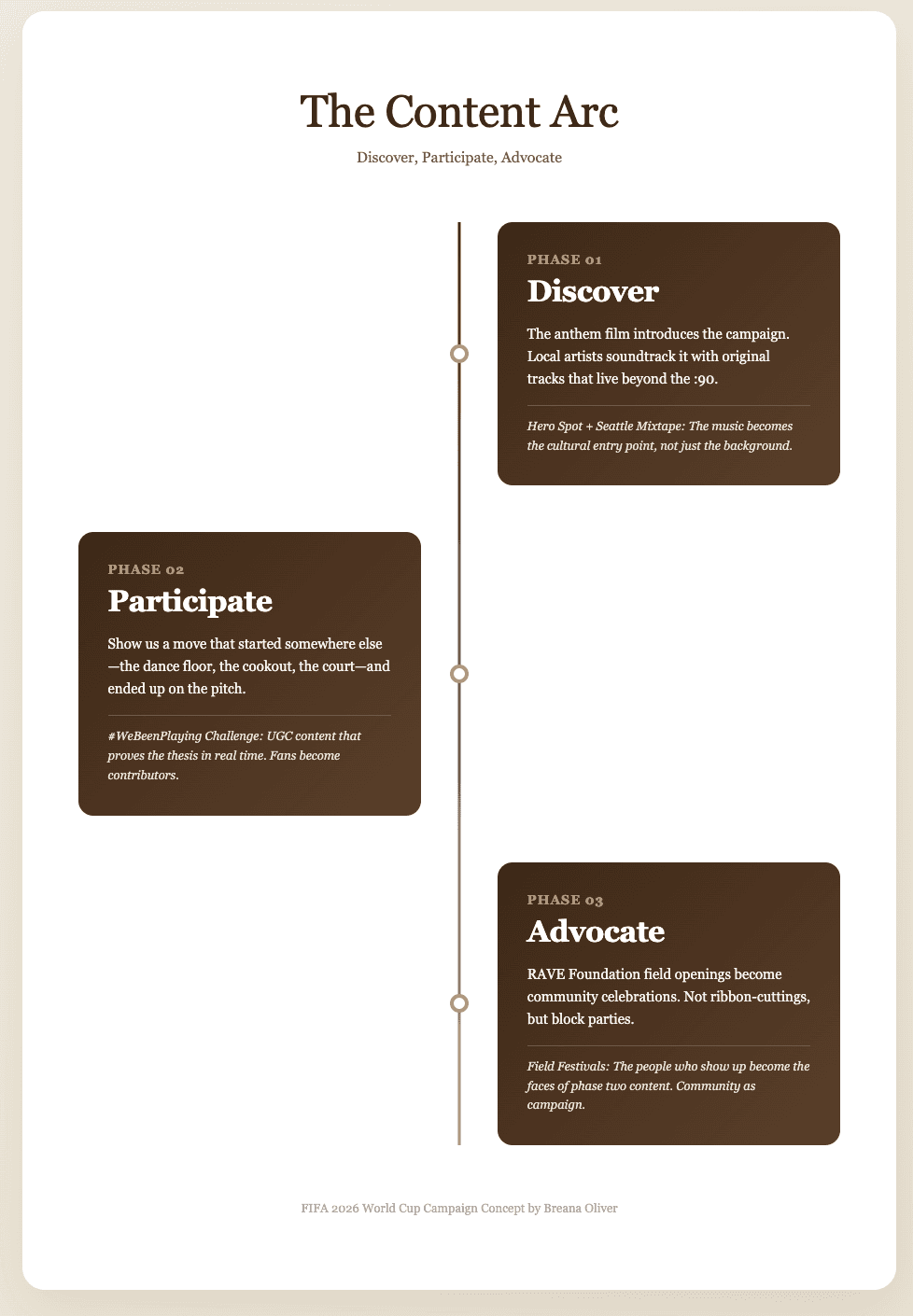
This campaign doesn't introduce soccer to Black communities. It acknowledges the game they've been playing all along. It positions the 2026 World Cup not as an arrival moment, but as a recognition moment.
Three pillars guide the work:
Heritage: Documenting the players, coaches, and community fields that built Seattle soccer before anyone was watching.
Joy: Soccer isn't something we need to learn. It's something we recognize. The game meeting us where we already are.
Future: Visible pathways from community fields to academy tryouts to professional contracts. Not talent searches, but talent recognition.

The Hero Spot
"We Been Playing" - :90 Anthem Film
Format: :90 Anthem Film
Visual Style: Documentary warmth meets spoken word energy. Mixed format. Super 8 footage, iPhone vertical video, 4K cinematic.
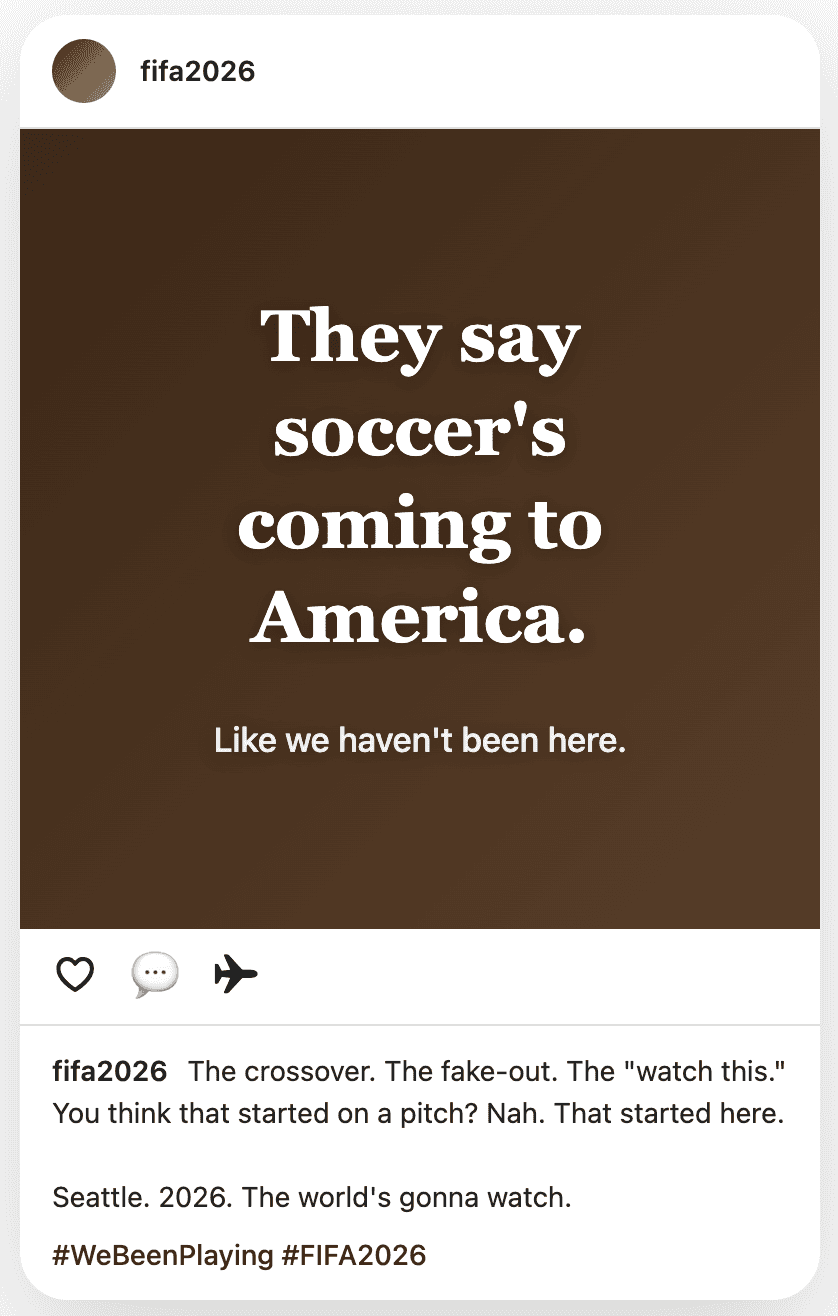
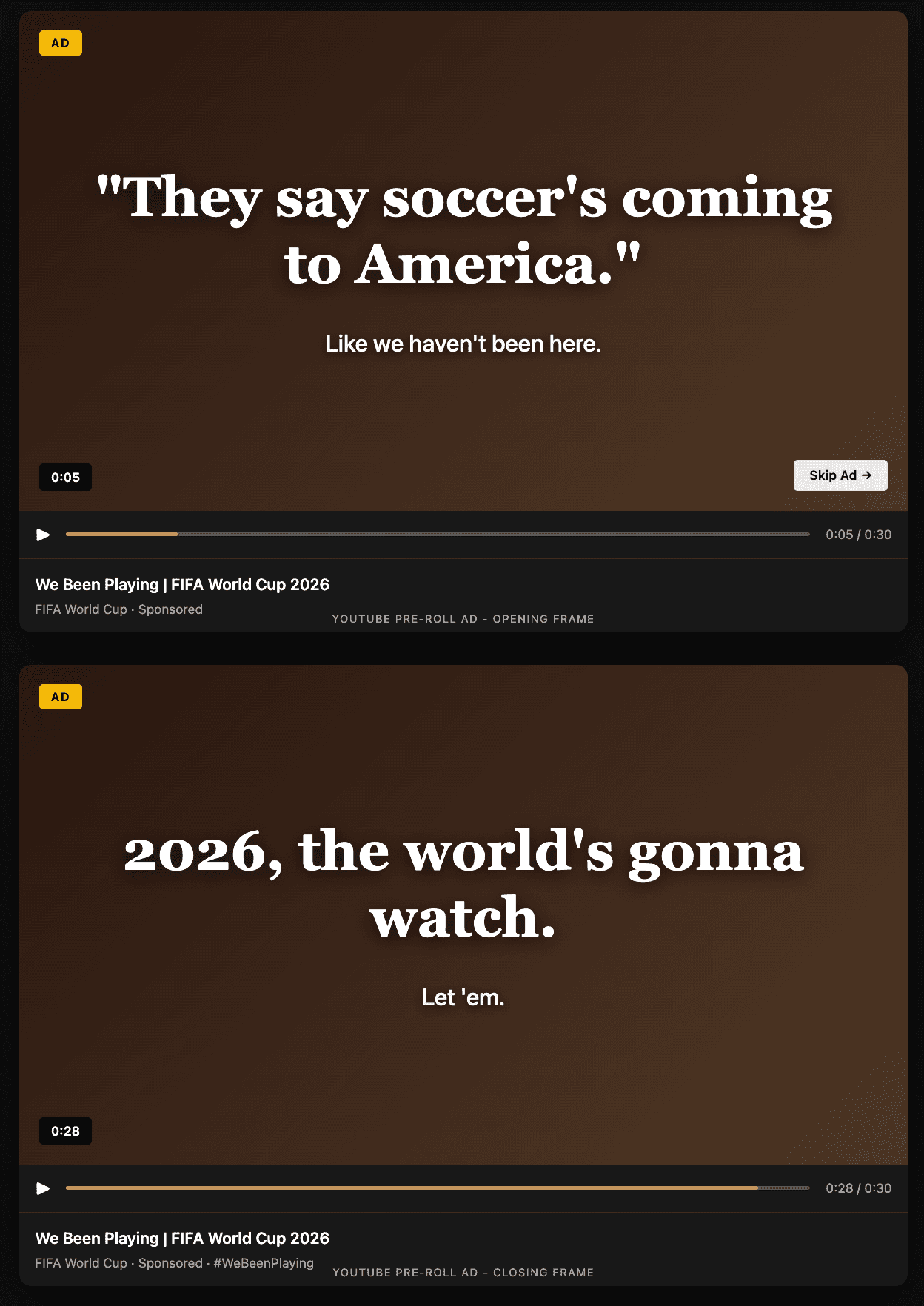
They say soccer's coming to America. Like we haven't been here.
Black screen. Sound of a ball bouncing on concrete. Cut to feet on pavement, kids playing in a park. Archive footage from the 90s, then match cut to the same field today.
The crossover. The fake-out. The "watch this." You think that started on a pitch? Nah. That started here.
Quick cuts between a dancer hitting a move and a player hitting a stepover. Hands clapping in church and after a goal. DeAndre Yedlin highlights intercut with footage of him as a kid in Seattle's Central District.
2026, the world's gonna watch. Let 'em.
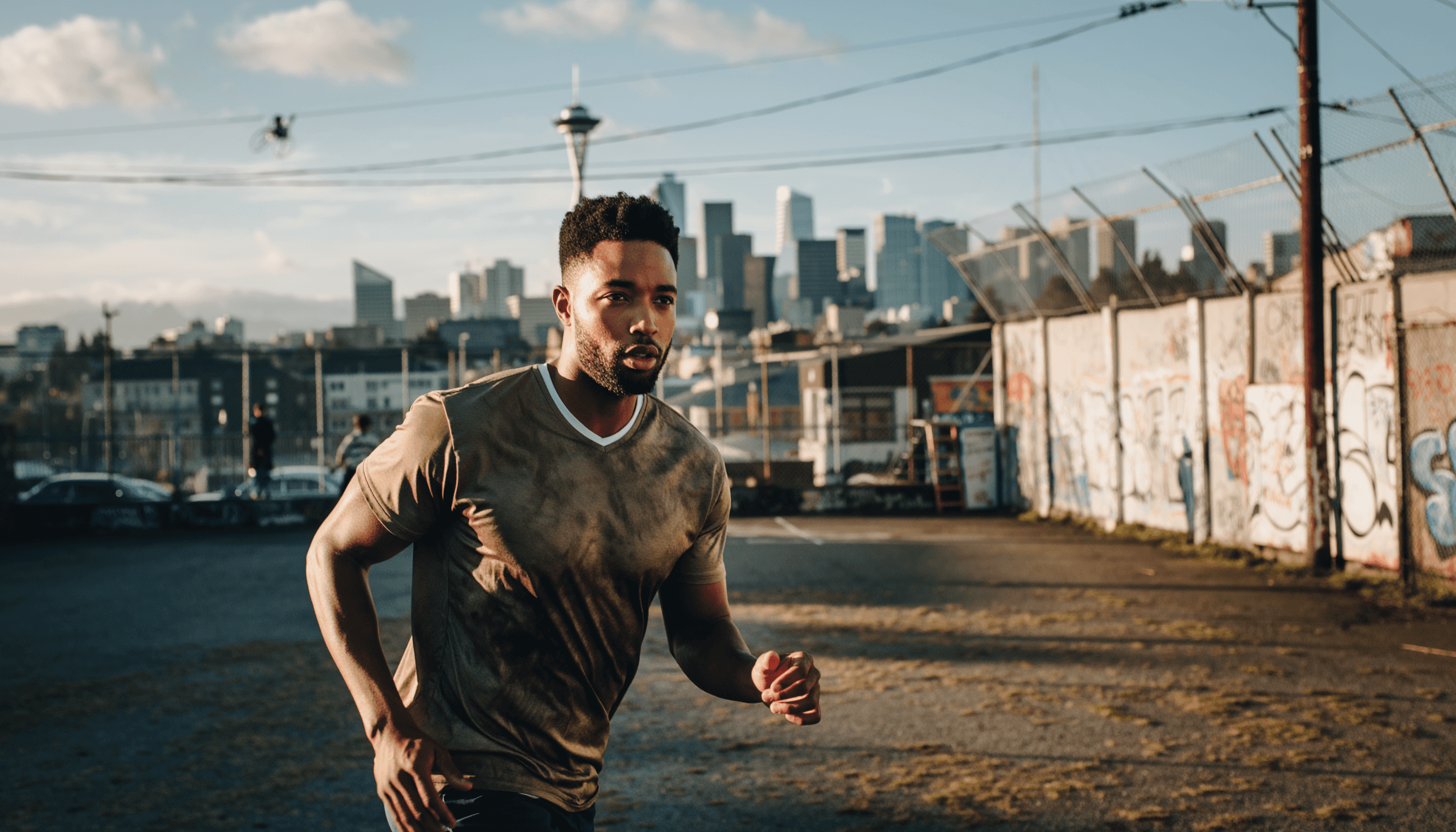
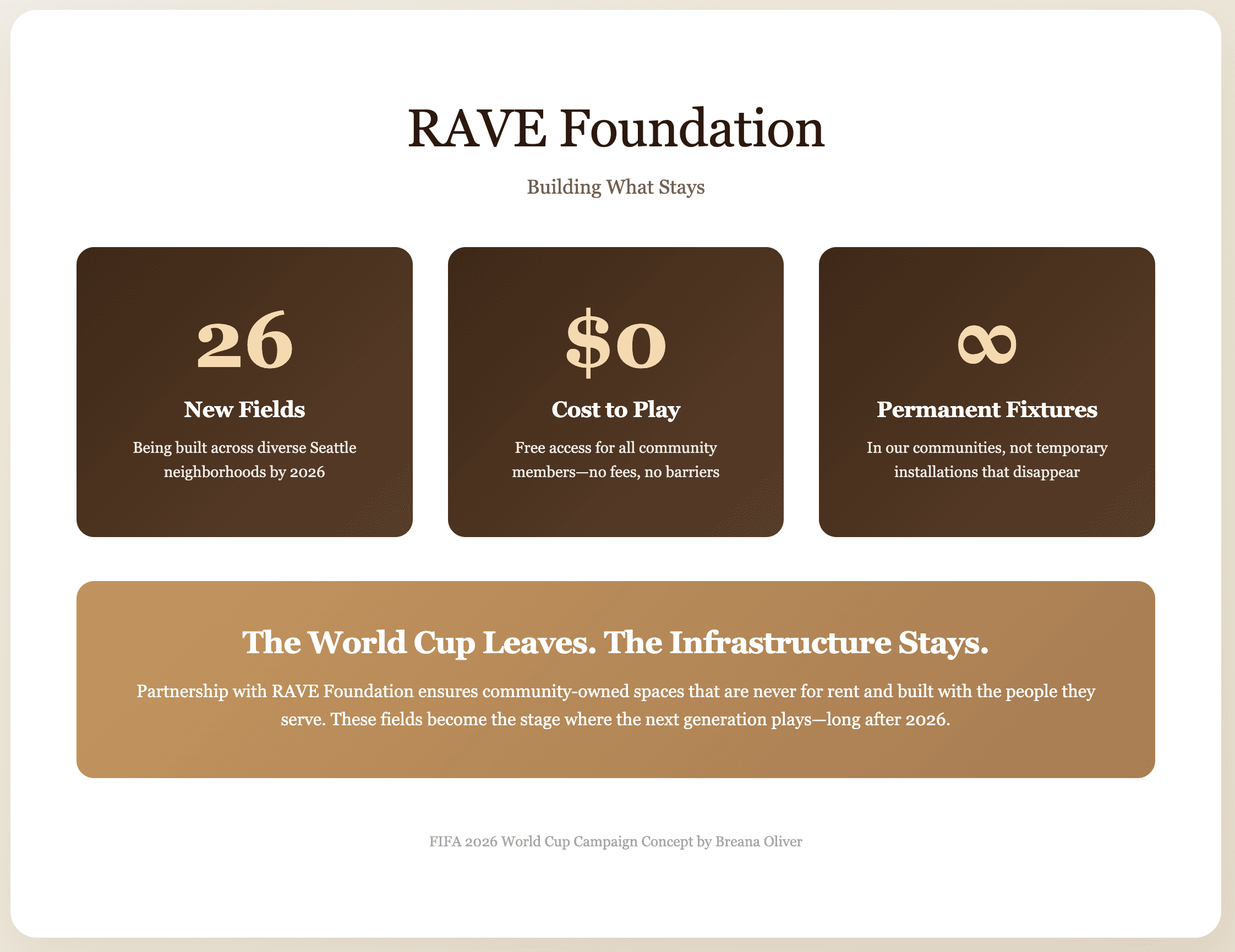
Golden hour light on a RAVE Foundation field. A little girl, maybe 7, ball at her feet, looks up confident. She flicks the ball up, juggles once, walks off frame.
SUPER: We been playing.
Voice in Action
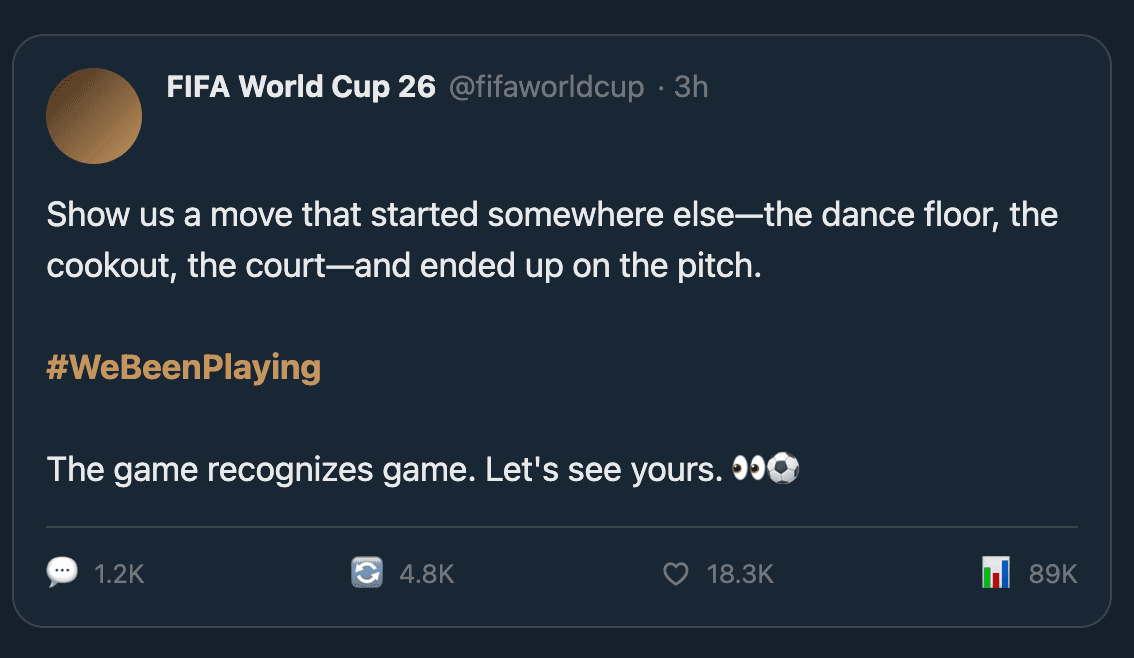
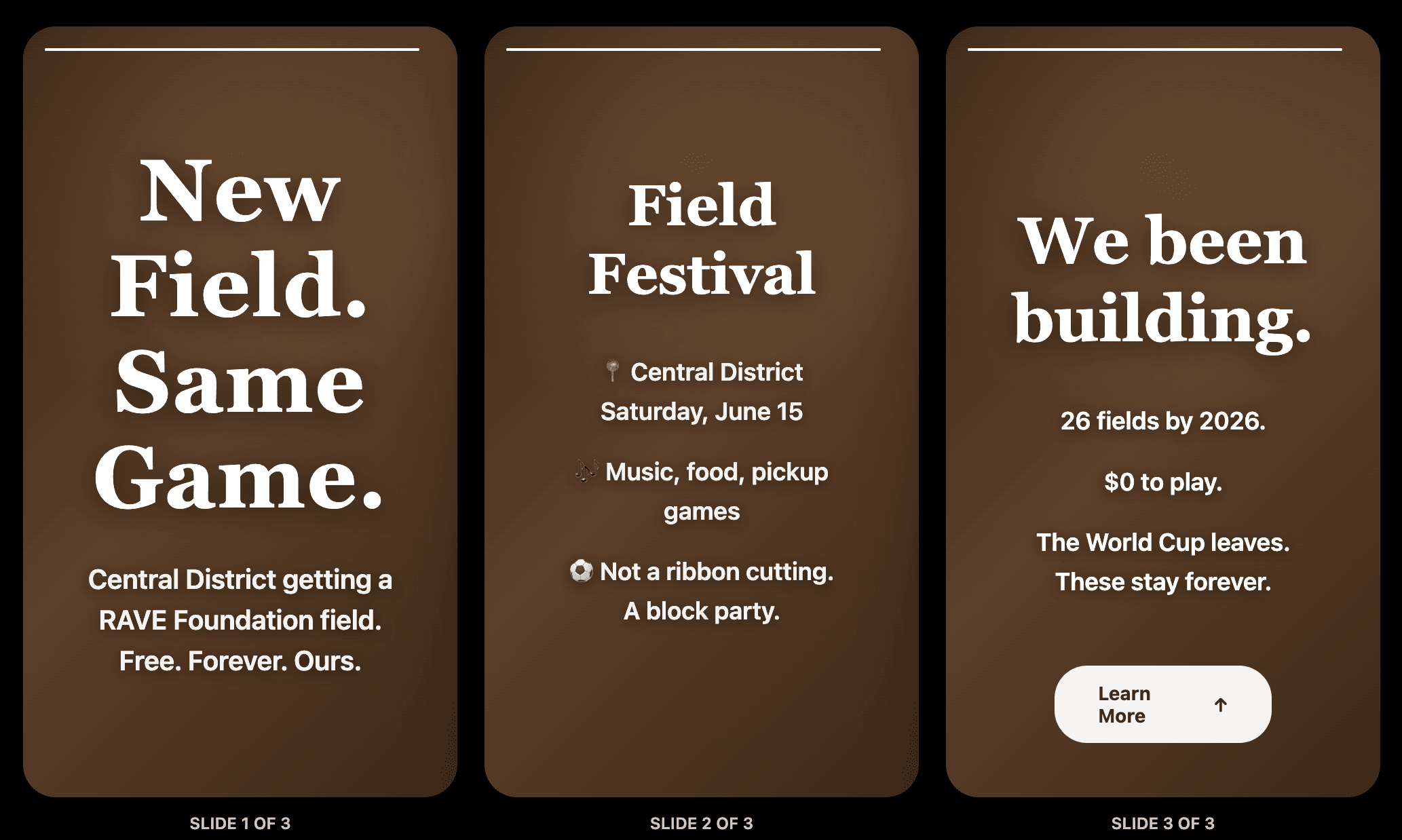
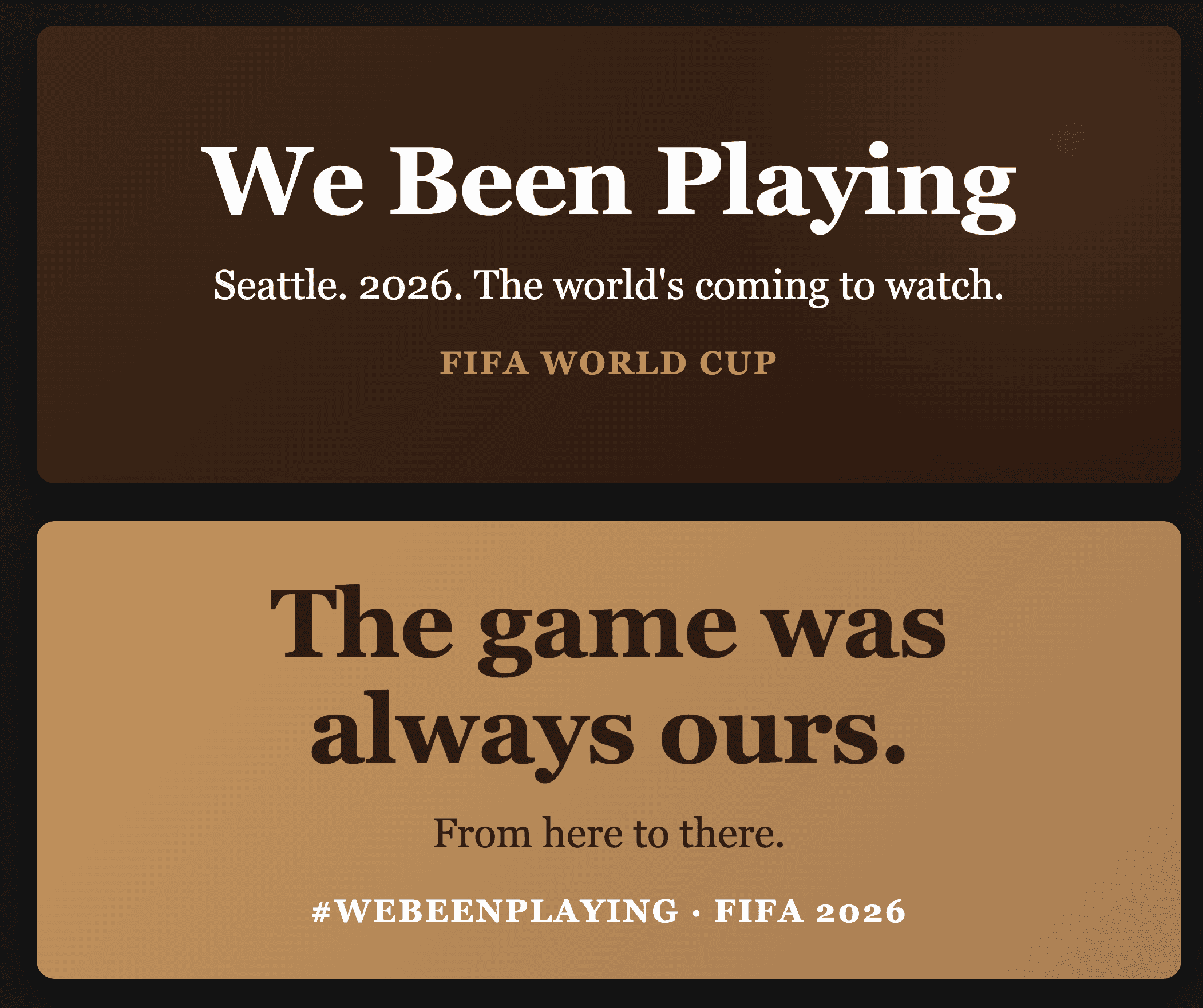
The campaign comes to life across every touchpoint, from social platforms to out-of-home, from UGC activation to field festival promotion.
Local Hero DeAndre Yedlin:
From the Central District to the World Cup
DeAndre isn't our spokesperson.
He's our receipts.
His journey traces the pathway: Central District neighborhood fields → Sounders Academy → Premier League → World Cup.
His story isn't the exception. It's the proof. Proof that the pathway exists when someone builds it. Proof that Black Seattle has always produced this talent when someone looks for it.
The campaign uses DeAndre not as a celebrity endorser, but as evidence. His story becomes the city's story and the blueprint for what's possible when communities get resourced instead of overlooked.
Scalability
Seattle Is the Proof of Concept. The Framework Travels.
Every World Cup host city has its own version of this story: Black communities with deep roots in movement, rhythm, and play that have been overlooked by mainstream soccer culture.
The playbook adapts to each city's cultural truth. Find the local hero. Partner with the people already building. Let local artists translate the campaign into authentic expression. The tagline stays. Everything else adapts.
From Seattle to Houston to Atlanta to LA, the same framework, different voices.
Results
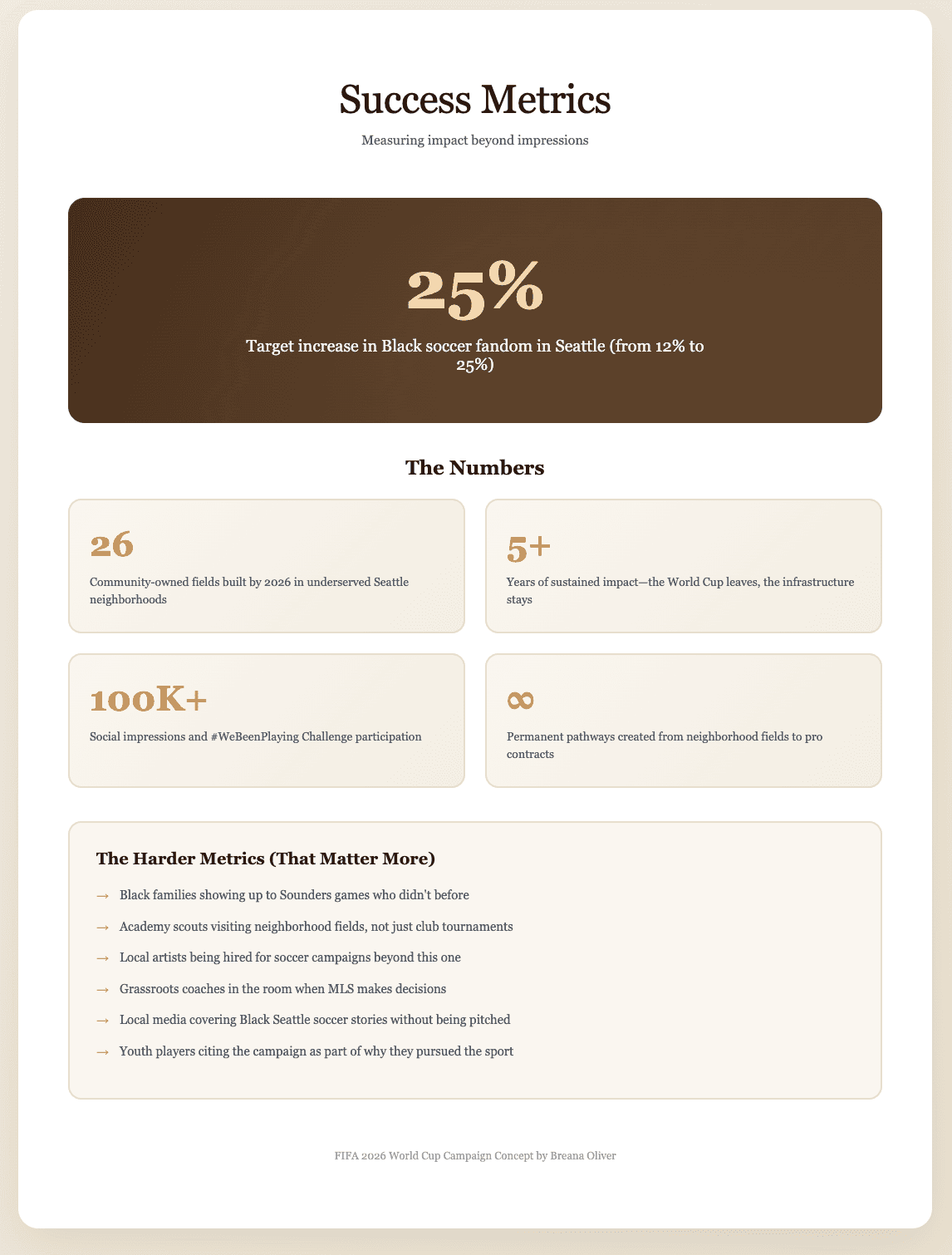
Projected metrics based on campaign framework and audience analysis.